Emergency Support
+91 7774 223344Gynecology
PCOS Symptoms and Treatment: A Complete Guide for Women
Medical Disclaimer: This article is AI-assisted and intended for general informational purposes only. It does not replace professional medical advice, diagnosis, or treatment. Please consult a qualified healthcare specialist for advice specific to your condition. Read full disclaimer

Polycystic ovary syndrome — PCOS — is one of the most common hormonal disorders in women of reproductive age, and also one of the most misunderstood. Many women spend years not knowing they have it. Others are told they have it without being given a clear explanation of what it means for their health, their periods, or their chances of having a child. This guide sets out to change that.
What Is PCOS?
PCOS is a condition in which the ovaries produce more androgens (male hormones) than usual. This excess disrupts the normal cycle of egg development and ovulation, often leading to small, immature follicles accumulating on the ovaries — the "polycystic" appearance on ultrasound that gives the condition its name.
Importantly, you do not need to have cysts on your ovaries to have PCOS, and having ovarian cysts does not automatically mean you have PCOS. The diagnosis is made on a combination of features — not ultrasound alone.
Symptoms of PCOS
PCOS presents differently in different women. Some have all the classic features; others have only one or two. The most common symptoms include:
- Irregular or absent periods — Often the most obvious sign. A cycle that is longer than 35 days, very unpredictable, or absent for months at a time is characteristic of PCOS.
- Excess hair growth (hirsutism) — Dark, coarse hair on the face, chin, chest, abdomen, or inner thighs, caused by high androgen levels.
- Acne and oily skin — Androgen-driven acne, often occurring on the face, back, and chest, persisting beyond typical teenage years.
- Hair thinning or loss — Scalp hair may thin in a male pattern at the crown or temples.
- Weight gain and difficulty losing weight — Many women with PCOS have insulin resistance, which makes weight management particularly challenging. Weight tends to accumulate around the abdomen.
- Difficulty conceiving — Irregular or absent ovulation makes natural conception harder. PCOS is the most common cause of anovulatory infertility.
- Mood changes — Anxiety and depression are significantly more common in women with PCOS, partly driven by the hormonal environment and partly by the psychological impact of the visible symptoms.
How Is PCOS Diagnosed?
The internationally accepted Rotterdam criteria require at least two of three features to be present:
- Irregular or absent ovulation (usually evidenced by irregular periods)
- High androgen levels — measured by blood test, or evident through symptoms like hirsutism and acne
- Polycystic ovaries on ultrasound (12 or more follicles per ovary in a certain size range, or increased ovarian volume)
Other conditions that can cause similar symptoms — thyroid disease, elevated prolactin, congenital adrenal hyperplasia — are excluded by blood tests before the diagnosis is confirmed.
"PCOS is a syndrome, not a disease with a single cure. But it is manageable — and for most women, the symptoms can be significantly reduced with the right approach."
Long-Term Health Risks of Untreated PCOS
PCOS is not just a fertility condition. Over time, unmanaged insulin resistance and hormonal imbalance raise the risk of:
- Type 2 diabetes — women with PCOS have a 5–10 times higher lifetime risk
- Cardiovascular disease — high BP, high cholesterol, and metabolic syndrome are more common
- Endometrial cancer — chronic lack of ovulation means the uterine lining is never fully shed, increasing cancer risk over years
- Sleep apnoea — particularly in overweight women with PCOS
This is why treatment is recommended even for women who are not currently trying to conceive and whose symptoms are mild.
PCOS Treatment Options
1. Lifestyle Changes
This is the first-line treatment for PCOS for a reason: it works. Even a 5–10% reduction in body weight in overweight women with PCOS can restore ovulation, reduce androgen levels, improve acne, and significantly lower the long-term metabolic risks. A diet lower in refined carbohydrates and higher in fibre and protein, combined with regular aerobic exercise, specifically targets the insulin resistance that drives much of PCOS.
2. Hormonal Medication
For women not trying to conceive, the combined oral contraceptive pill is the most commonly prescribed treatment. It regulates periods, reduces androgen levels (improving acne and hirsutism), and protects the uterine lining from the risks of chronic anovulation. Anti-androgen medications are sometimes added for more persistent hair or skin symptoms.
3. Metformin
Originally a diabetes medication, metformin improves insulin sensitivity in PCOS, and can help to regularise periods, support weight loss, and reduce long-term diabetes risk. It is particularly useful in women with significant insulin resistance or metabolic features.
4. Fertility Treatment
For women with PCOS who are trying to conceive, the approach depends on how irregular ovulation is:
- Ovulation induction — Letrozole (first-line) or clomiphene are used to stimulate egg release
- Gonadotropin injections — If oral tablets do not work, low-dose FSH injections can be used
- IVF — Reserved for cases where simpler treatments have not worked, or where other fertility factors are also present. Women with PCOS respond well to IVF but need careful stimulation protocols to avoid overstimulation (OHSS). See our guide on preparing for IVF.
How Sankalp Hospital Can Help
At Sankalp Hospital, Ambikapur, our gynaecology and fertility team manages PCOS from diagnosis through every stage of treatment — including tailored ovulation induction for women trying to conceive and fertility guidance specific to PCOS. Whether your main concern is irregular periods, skin symptoms, weight, or conceiving, our specialists can build a management plan for where you are right now.
Watch: Related Videos
Related health videos from the Sankalp Hospital YouTube channel.
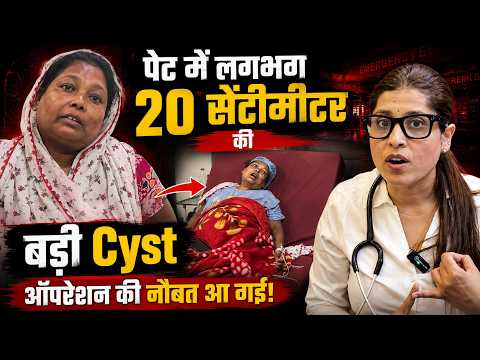 पेट में 20cm की Cyst बेटी की शादी की चिंता में जी रही थी मां | Dr Ankita Bansal Goyal
 Vaginal Swelling Causes | योनि में सूजन का कारण क्या है? | Dr. Ankita Bansal Goyal
Frequently Asked Questions
Related Articles