Emergency Support
+91 7774 223344Gynecology
High-Risk Pregnancy: What It Means and How to Stay Safe
Medical Disclaimer: This article is AI-assisted and intended for general informational purposes only. It does not replace professional medical advice, diagnosis, or treatment. Please consult a qualified healthcare specialist for advice specific to your condition. Read full disclaimer

The phrase "high-risk pregnancy" sounds alarming, but it is a clinical description, not a prediction of a bad outcome. It means that one or more factors — in the mother's health, the baby's development, or the pregnancy itself — require additional monitoring and specialist involvement. With the right care, most women with high-risk pregnancies deliver healthy babies.
Understanding what places a pregnancy in the high-risk category, and what that means for your antenatal care, helps you engage with your treatment rather than simply feel anxious about a label.
What Makes a Pregnancy High-Risk?
A pregnancy can be considered high-risk because of conditions the mother had before conceiving, conditions that develop during pregnancy, or characteristics of the pregnancy itself (such as multiple babies or a baby with a detected abnormality).
Pre-Existing Medical Conditions
- Diabetes (Type 1 or Type 2) — Poor blood sugar control in early pregnancy significantly raises the risk of birth defects, miscarriage, and complications at delivery.
- Hypertension (high blood pressure) — Existing high BP increases the risk of pre-eclampsia, placental problems, and preterm delivery.
- Thyroid disorders — Both hypothyroidism and hyperthyroidism, if uncontrolled, affect the baby's brain development and the mother's risk of miscarriage.
- Heart disease — The cardiovascular demands of pregnancy can worsen underlying cardiac conditions.
- Kidney disease, autoimmune disorders, epilepsy — All require careful medication review and closer monitoring during pregnancy.
- Obesity — A BMI above 30 raises the risk of gestational diabetes, pre-eclampsia, blood clots, caesarean section and wound complications.
Age-Related Factors
Women under 17 or over 35 are considered to be at higher risk compared to the typical reproductive age range. After 35, the risk of chromosomal conditions like Down's syndrome rises, as does the likelihood of pre-existing medical conditions and pregnancy complications such as placenta praevia.
Conditions That Develop During Pregnancy
- Gestational diabetes — Develops in pregnancy even without pre-existing diabetes. It raises risk of a large baby, shoulder dystocia at delivery, and caesarean section.
- Pre-eclampsia — High blood pressure plus protein in the urine after 20 weeks. It can progress rapidly and is a leading cause of maternal and neonatal death worldwide if not managed.
- Placenta praevia or placenta accreta — The placenta partially or completely covers the cervix, causing risks of serious bleeding.
- Preterm labour — Labour starting before 37 weeks requires assessment and sometimes intervention to delay it.
- Intrauterine growth restriction (IUGR) — The baby is not growing at the expected rate, usually because the placenta is not delivering enough nutrients.
Multiple Pregnancies
Twins, triplets, or higher-order multiples automatically place a pregnancy in the high-risk category because of the increased risk of preterm delivery, growth discordance between babies, twin-to-twin transfusion syndrome, and operative delivery.
What High-Risk Antenatal Care Involves
Being classified as high-risk does not mean something will go wrong. It means your care plan changes to catch problems early. Typically this involves:
- More frequent antenatal visits, often every 2–4 weeks rather than monthly
- Additional growth scans and Doppler blood flow studies
- Regular blood pressure monitoring and urine tests
- Closer blood sugar monitoring if gestational diabetes is present
- Specialist consultations with a maternal-foetal medicine expert, cardiologist, endocrinologist, or nephrologist where relevant
- Planned delivery timing and mode — many high-risk pregnancies are delivered at 37–39 weeks rather than waiting for spontaneous labour
"High risk does not mean high fear. It means high attention — and attention is what turns risky situations into safe deliveries."
The Role of Pre-Pregnancy Counselling
For women with known conditions like diabetes, hypertension, or epilepsy, seeing a specialist before conceiving is one of the most effective things they can do. Pre-pregnancy counselling allows medication to be reviewed and switched to pregnancy-safe alternatives, blood sugar or blood pressure to be optimised, and folic acid supplementation to begin at the right dose — all before the critical early weeks of development.
Warning Signs to Watch for During a High-Risk Pregnancy
Even with excellent antenatal care, knowing the symptoms that need urgent assessment is important. Go to the hospital immediately if you experience:
- Sudden severe headache, visual changes, or upper abdominal pain (signs of pre-eclampsia)
- Reduced or absent foetal movements
- Heavy vaginal bleeding
- Rupture of waters before 37 weeks
- Severe swelling of the face, hands, or feet
- Chest pain or breathlessness
Emotional Impact: Coping with a High-Risk Pregnancy
Anxiety is almost universal in high-risk pregnancies, and it is entirely understandable. Practical steps that help include: writing down questions before appointments so nothing is forgotten, building a reliable support system, reducing unnecessary internet searching in favour of direct conversations with your doctor, and where needed, speaking to a counsellor. Stress itself is a manageable risk factor — it is not a reason to carry this alone.
How Sankalp Hospital Supports High-Risk Pregnancies
At Sankalp Hospital, Ambikapur, our obstetrics team manages high-risk pregnancies through dedicated monitoring, in-house specialist consultations, a level-3 NICU for preterm or unwell newborns, and 24-hour emergency obstetric care. Whether the risk is maternal health, foetal growth, or a multiple pregnancy, our goal is the same: a safe delivery and a healthy start for your baby. To discuss your pregnancy with our team, book a consultation or visit our guide to your first antenatal visit.
Watch: Related Videos
Related health videos from the Sankalp Hospital YouTube channel.
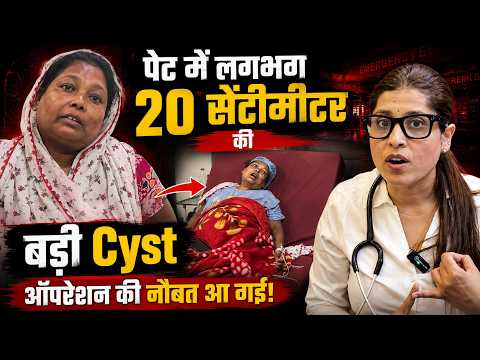 पेट में 20cm की Cyst बेटी की शादी की चिंता में जी रही थी मां | Dr Ankita Bansal Goyal
 Vaginal Swelling Causes | योनि में सूजन का कारण क्या है? | Dr. Ankita Bansal Goyal
Frequently Asked Questions
Related Articles