Emergency Support
+91 7774 223344Orthopaedics
Bone Health: The Role of Calcium, Vitamin D and Exercise
Medical Disclaimer: This article is AI-assisted and intended for general informational purposes only. It does not replace professional medical advice, diagnosis, or treatment. Please consult a qualified healthcare specialist for advice specific to your condition. Read full disclaimer

Most people do not think about their bones until one breaks. That is understandable — bone is silent, and bone loss gives no warning pain or visible sign until a fracture occurs. Yet the choices made through childhood, early adulthood, and midlife — what you eat, how much sunlight you get, how you move — determine bone density decades later. The good news is that meaningful bone protection is within reach at any age, starting now.
How Bones Work: Living Tissue, Not Static Structure
Bone is not inert material like concrete. It is living tissue that is constantly being remodelled — old bone removed by osteoclast cells and new bone deposited by osteoblast cells. In childhood and early adulthood, bone formation outpaces resorption, and bones grow denser. Peak bone mass is reached between ages 25–35. After that, the balance gradually tips the other way. In women, the decline accelerates sharply in the years after menopause, when the protective effect of oestrogen is lost.
Osteoporosis is the condition where bone density has fallen enough that ordinary stresses can cause fractures — often of the wrist, hip, or spine.
Calcium: The Building Block
Calcium is the main mineral in bone. The body cannot make it — it must come from the diet. Critically, if the diet does not provide enough calcium, the body withdraws it from the bones to keep blood calcium constant, slowly depleting the skeleton.
How Much Calcium Do You Need?
- Children and teenagers: 1,000–1,300 mg per day
- Adults 19–50: 1,000 mg per day
- Women over 50 and men over 70: 1,200 mg per day
Best Dietary Sources of Calcium
- Dairy: One glass of milk (~300 mg), one cup of curd (~200 mg), one serving of paneer (~200 mg)
- Leafy greens: Ragi (finger millet) is exceptionally rich in calcium — one of the best plant sources available in India (~350 mg per 100g)
- Sesame seeds: Small amounts provide significant calcium
- Small fish with bones eaten whole (like sardines)
- Calcium-fortified plant milks and foods
Vitamin D: The Calcium Activator
Calcium cannot be absorbed from the gut without adequate vitamin D. Vitamin D is unique because the body manufactures it when skin is exposed to sunlight — but in practice, vitamin D deficiency is extremely common in India, even in sunny climates. This happens because people avoid direct sun, use heavy clothing and sunscreen, work indoors, or have darker skin that requires more sun exposure to produce the same amount.
Signs of Vitamin D Deficiency
- Muscle weakness and aches
- Bone pain or tenderness
- Fatigue that does not improve with rest
- Frequent infections (vitamin D also plays a role in immunity)
- In children: rickets (soft, bowed bones)
Getting Enough Vitamin D
The only reliable way to know your vitamin D status is a blood test (25-hydroxyvitamin D). If deficient, supplementation under medical supervision is the most effective solution. The primary food sources of vitamin D are limited (fatty fish, egg yolk, fortified foods), which is why sunlight or supplementation are the primary strategies.
"In our clinics we see many patients with significant bone loss in their 50s and 60s who had no idea it was happening. Regular screening and correcting simple deficiencies — vitamin D, calcium, exercise — would have prevented most of it."
Exercise: Load the Bones to Strengthen Them
Bone responds to mechanical stress by becoming denser. This is why weight-bearing exercise is essential for bone health in a way that swimming and cycling — excellent as they are for the heart — are not. The impact or resistance stimulus is the key signal.
Best Exercises for Bone Health
- Walking and jogging — The most accessible weight-bearing activities
- Strength training and resistance exercises — Loading specific bones (spine, hips) with weights or resistance bands is especially effective at maintaining bone density after menopause
- Dance, aerobics, skipping — Higher impact, better bone stimulus
- Yoga and balance exercises — Improve coordination and reduce fall risk, which is just as important as bone density in preventing fracture
Other Factors That Affect Bone Health
- Smoking — Reduces bone density directly and lowers oestrogen in women
- Alcohol — Excessive consumption impairs calcium absorption and bone formation
- Long-term steroid use — Corticosteroids cause significant bone loss; supplementation is routinely prescribed alongside
- Thyroid and parathyroid conditions — Both hyperthyroidism and hyperparathyroidism accelerate bone loss
- Early menopause — Women who go through menopause before age 45 have significantly higher fracture risk
How Sankalp Hospital Can Help
At Sankalp Hospital, Ambikapur, our orthopaedic team provides bone density assessment, vitamin D and calcium evaluation, and fracture risk assessment for adults at every stage of life. If you have been told you have osteoporosis or osteopenia, or if you are concerned about your bone health, our specialists can guide you through screening, supplementation, and exercise planning. For related reading, see our article on osteoporosis screening.
Watch: Related Videos
Related health videos from the Sankalp Hospital YouTube channel.
 पैर बिल्कुल जाम था! | Knee Surgery Success Story, Patient Testimonial #sankalphospital #kneepain
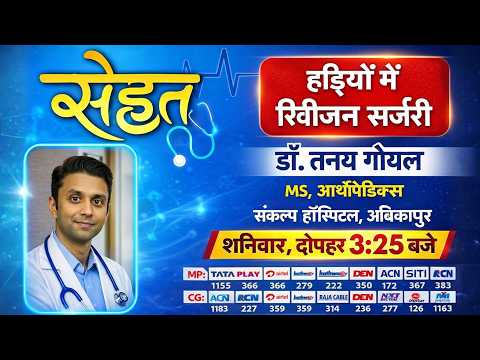 Why Your Bone Surgery Failed! The Truth About Revision Surgery!
Frequently Asked Questions
Related Articles